If you know me, you know I have some negative feelings about the enshittification of social media. Specifically, the soulless, science-based addiction-maxxing patterns designed to keep users hooked [1].
Here’s a fun quote from the guy Justin Timberlake played in The Social Network:
“How do we consume as much of your time and conscious attention as possible?”
- Sean Parker, Facebook founding president
Parker also admits that platform features (likes, notifications, etc) are designed around giving users “a little dopamine hit”, which works “because you’re exploiting a vulnerability in human psychology”. That’s nice.
I’m not gonna argue that everyone needs to immediately delete their social media accounts and never touch them again. But I believe it’s important to think through social media companies’ incentives and why they’re so desperate for your time and attention. Spoiler alert: the more time you spend using their apps, the more money they make. That’s basically it - the apps are free because you’re the product. Which is fine for consenting adults, in my opinion, as long as they understand the casino-like environment they’re gambling in. And unfortunately, I have an inkling that many people don’t.
They want me back so bad
Check out this email I received from Instagram a few days ago. The subject of this email was “[friend] and 7 others recently added to their stories”.
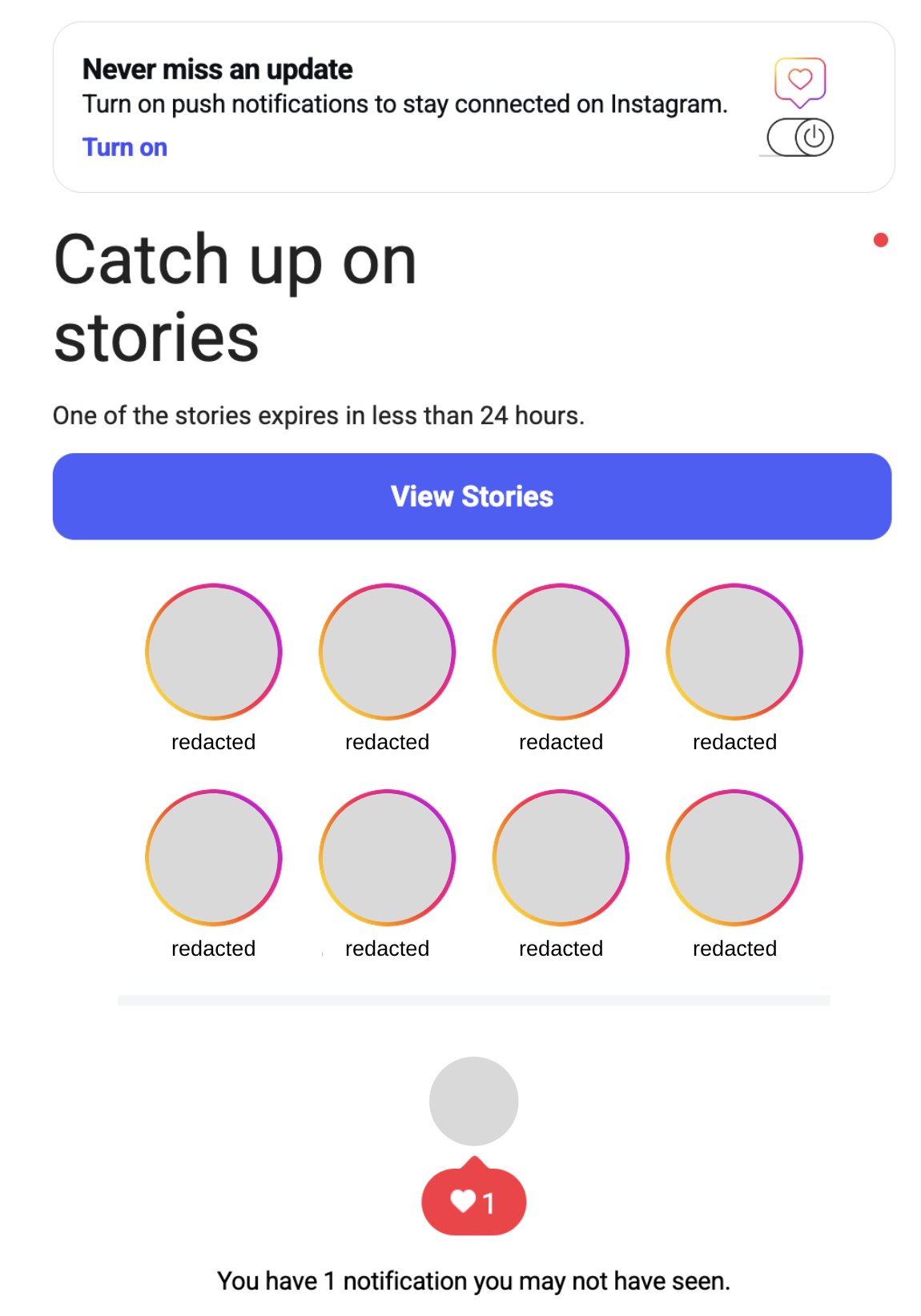
Meta being Meta, I think it’s safe to assume that everything in this email was included after deliberate analysis or A/B testing.
Let’s see if we can find all the tactics being used here!
I’ll start with the subject line - “[friend] and 7 others recently added to their stories”. To me, this is a small-scale example of social proof, meant to make me feel left behind, or like I’m missing out on what everyone else is doing.
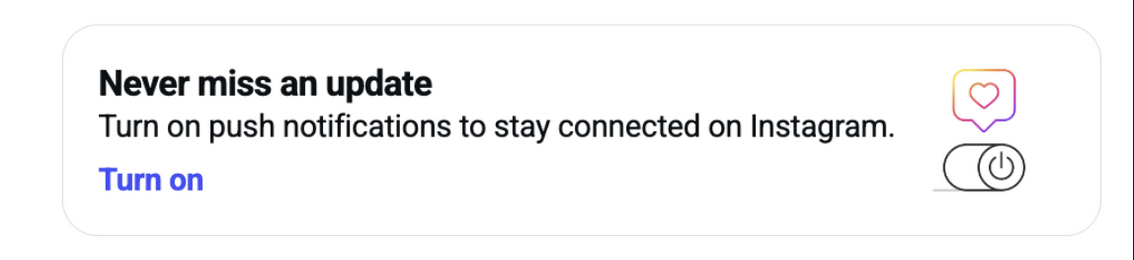
Then there’s the call-to-action about turning on notifications to “never miss an update” and “stay connected”. I guess the implication here is that I’ve already missed some updates, therefore I’m no longer connected to my friends? Now I’m sad 😢
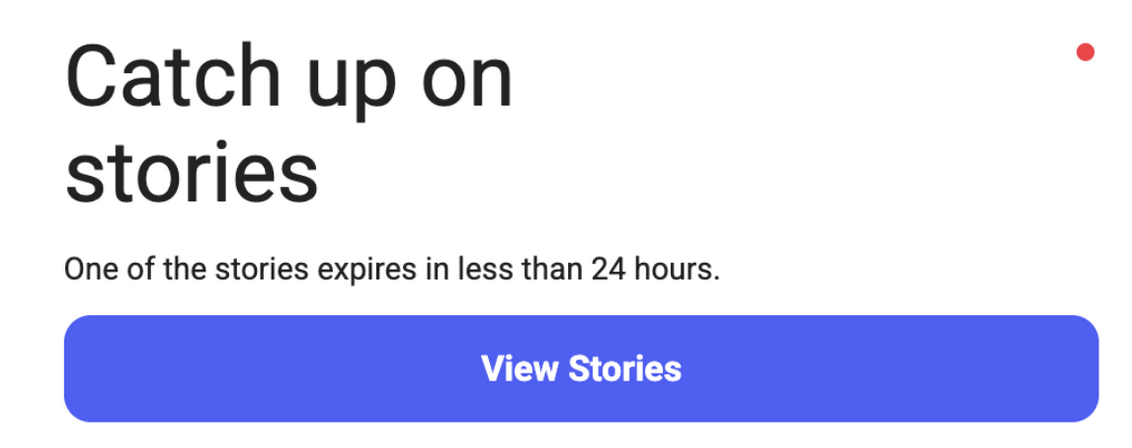
Next, we have the big “Catch up on stories” header, with the mysterious red notification dot. Fun fact, that dot is actually a unique, clickable link in the email! Meaning whoever put that dot there knew users would see the dot and be conditioned to think “ooh red dot, me likey notification, me click”.
“One of the stories expires in less than 24 hours.” Oh no! Scarcity! I need to act now or I’ll miss it forever! Side note - don’t all Instagram stories expire in 24 hours anyway? I think the wording is intentional to evoke a sense of urgency.
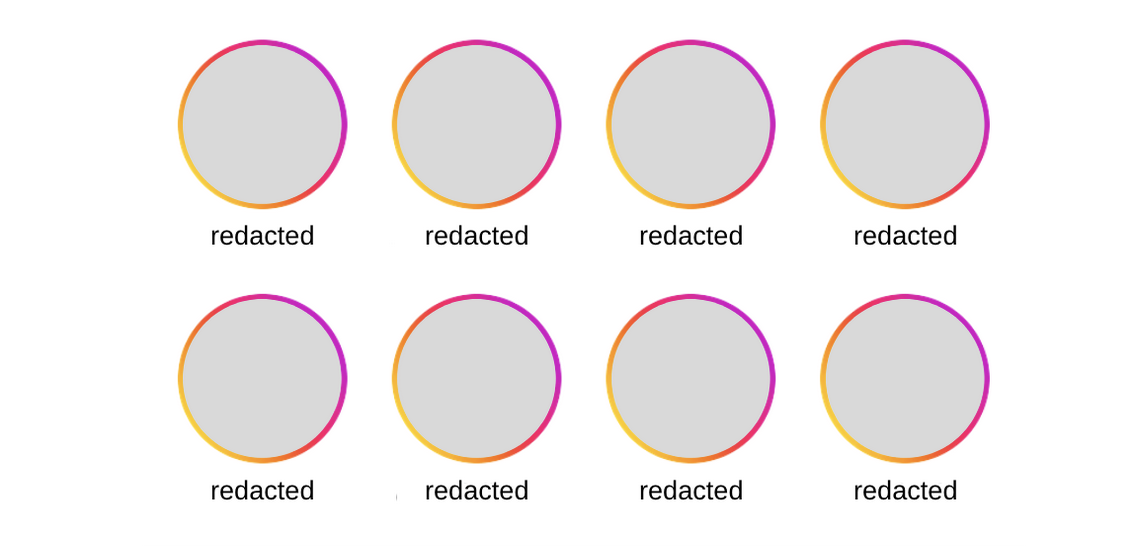
Now we come to the colored story icons (originally these had usernames and profile pictures for 8 different friends, which I anonymized). This feels very Pavlovian to me. Through my past Instagram use, I’m conditioned to know that a colorful circle means fresh content, and tapping it leads to an instant dopamine hit. There’s an automatic instinct to click or tap those icons, even though it’s in a completely different context.
And of course, we can’t forget about the little heart icon with the notification counter. Someone likes me! Very mysterious, I wonder who it’s from and what it says! If Instagram was really trying to serve my best interests, couldn’t they have just shown the notification in the email to save me some time?
Imagine getting a text from a friend saying “Hey, haven’t seen you in a while, you should come over!” An invitation like that comes from a place of love and concern, from someone who cares about you. An email from a social media company is not that. Instagram is literally trying to use carefully curated psychology to trick me into using their platform. It’s a tactic from a machine designed to convert my precious time and attention into profits.
Is social media all bad?
Some of you reading this might think I’m being a bit over-the-top. It’s just an email Matt, chill out!
Maybe my analysis is pessimistic. Maybe I’m reaching a bit. Maybe the employees at Instagram are just doing their jobs and think they’re making the world a better place. Maybe whoever designed the email genuinely thinks that coming back to Instagram will make me happier and improve my life, and they’re doing me a favor by nudging me in the right direction. Or maybe modern social media is a net-negative in the world and we’d all be better off without it. Who’s to say?
Like most things in life, there’s probably not a one-size-fits-all solution, and some nuance is required. But I do think (and hope) that in the near future we’ll look back on social media as the tobacco of our day. Without additional oversight or regulation, social media companies will continue to push the envelope of addiction tactics to maximize profit.
Social media vs social networks
One thing worth pointing out is the difference between “social media” and “social networks”. Consider this:
- Social media: the company is in the business of media. The goal is to extract value out of users by maximizing their time spent in the app to feed them as many targeted ads as possible. This allows the company to sell ad space for top dollar. Maximizing users’ time spent in the app means the company is incentivized to make you as addicted as possible, with no regard for your actual satisfaction or well-being (similar to a casino…)
- Social network: the platform is focused on communication and relationship-building, mainly through two-way interactions. These are becoming increasingly rare, and many companies that started out as social networks have transitioned into media companies.
It might seem ironic given the nature of this post, but I have really fond memories of the early Facebook days, when it truly fell into the "social network" category. Believe it or not, there was a time when Facebook was minimal, simple, and only really used as an enhancement to in-person friendships (at least in my circle). No ads, no algorithm, just a basic chronological timeline with updates from a handful of close friends.
Now that we’re all accustomed to the constant barrage of addiction tactics (autoplay, endless scroll, notifications, clickbait, algorithmically-optimized recommendations) in modern social media apps, I think if you picked a random person off the street and gave them access to early Facebook, they’d probably find it stale and boring. If only we could put the genie back in the bottle… should I try to build this? 🤔
My challenge
Here’s an interesting thought experiment: when’s the last time you went a day without social media? A week? A month? If that feels impossible, hopefully this post can help you see why, and that it’s not your fault.
Regardless of your current usage or thoughts about social media companies, I would challenge anyone reading to try the following:
- Remove any social media apps from your phone’s home screen, so you don’t see the icons every time you use your phone
- Disable all social media notifications, so you can decide to check in on your own time
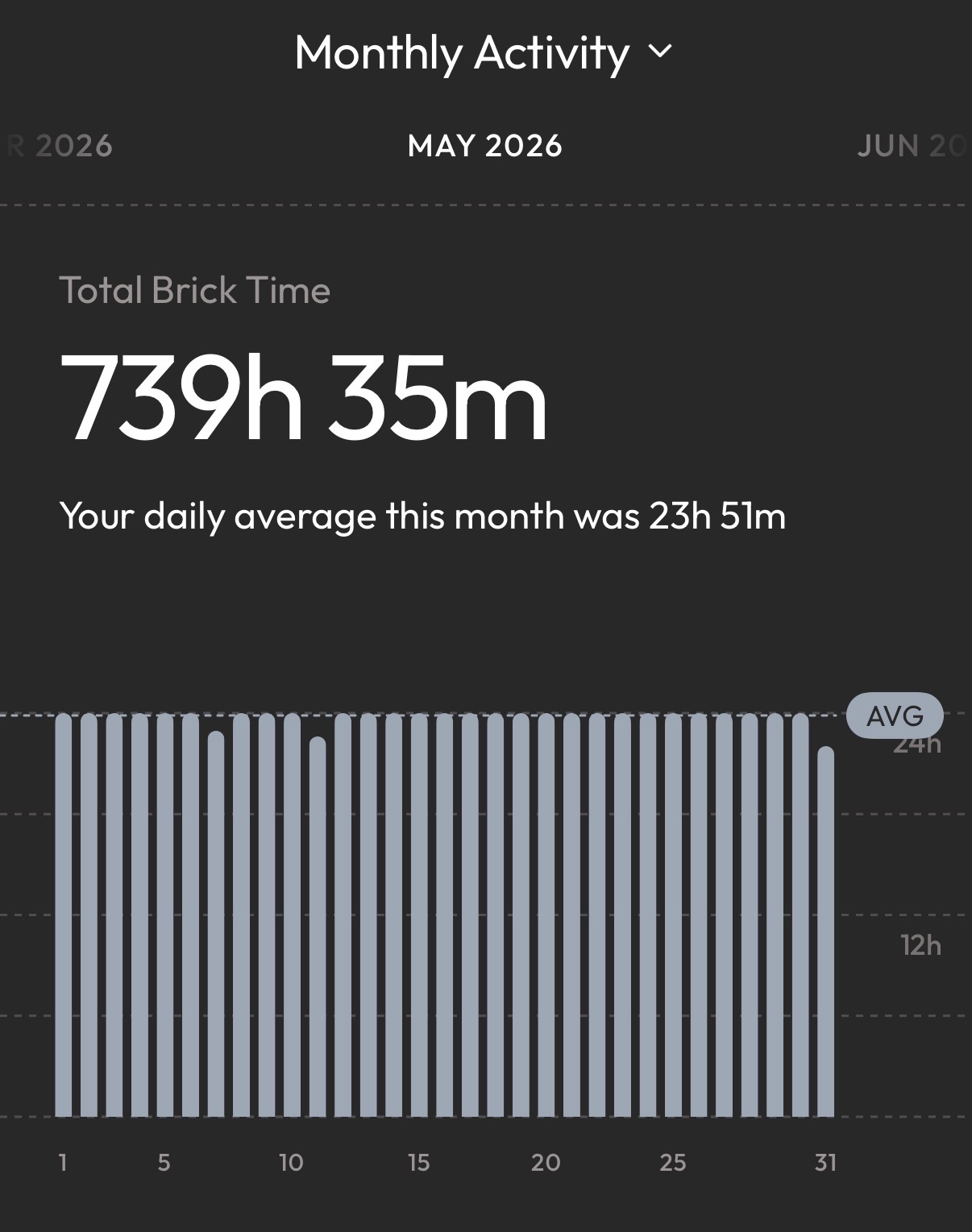
- Make a conscious decision about how much time you want to spend on social media, and set aside specific time blocks for that usage. Getting a Brick device has been an actual life-changer for me (not sponsored, it’s just a genuinely helpful tool)
In fact, here are my May Brick stats which I'm proud of! "Brick Time" refers to time when my phone was "bricked", meaning social media apps were disabled.
If you made it this far, thanks for sticking with my rant. I’d love to hear your thoughts on the subject. I hope spreading some awareness about tricky addiction tactics can spark some thoughts and discussions between you and your loved ones.
[1] "But if people feel like they're not having a good experience, why would they keep using the product?" Gee I don't know Mr. Zuckerberg, maybe because your company intentionally tries to addict its users, especially tweens and teens?